Shock Loss Timeline Hair Transplant Pictures: The Real Journey Visualized
If you have recently undergone a hair restoration procedure, or if you are diligently planning your upcoming surgery, there is one specific phase that triggers more post-operative panic than any other. It is the sudden, unexpected shedding of both your newly implanted grafts and your existing hair. This biological event is known as temporary shedding, and tracking it using a comprehensive shock loss timeline hair transplant pictures reference is the absolute best way to protect your peace of mind.
In the world of modern hair restoration, we often see dazzling "before and after" transformations plastered across social media. However, what happens during the messy middle? What does the scalp actually look like when the temporary hairs begin to drop away en masse? For most patients, waking up to find hairs on their pillow three weeks after surgery feels like a nightmare—even though it is a completely healthy, expected indicator of cellular regeneration.
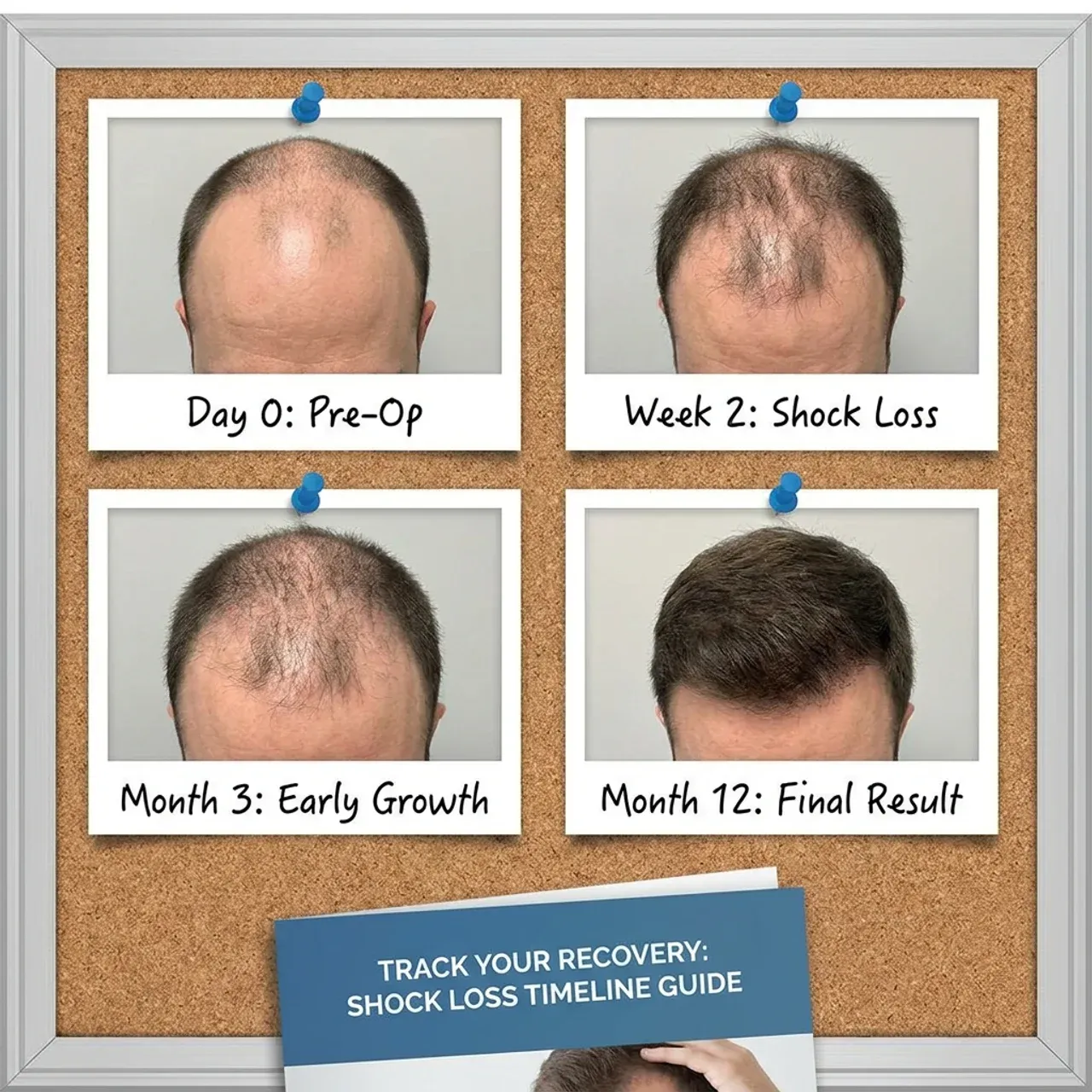
To help you navigate this emotional rollercoaster with data-backed confidence, we have assembled the ultimate guide. By exploring the underlying physiology, breaking down the surgical healing phases week by week, and contextualizing what you should look for in authentic progress images, you can bypass the anxiety and focus entirely on a clean, successful recovery.
1. The Science of the Shed: Why Does Shock Loss Happen?
To understand the visual data behind typical recovery photos, we must first demystify the biological mechanism at play. Your hair follicles are highly sensitive, complex micro-organs. When they are subjected to surgical trauma, an abrupt shift occurs within their natural lifecycle.
The Surgical Trauma Disruption
During either a Sapphire FUE or a DHI (Direct Hair Implantation) procedure, the scalp experiences localized trauma in two distinct zones: the donor area (where follicles are extracted) and the recipient area (where they are precisely embedded). The microscopic micro-incisions, combined with the temporary disruption of local blood circulation and the administration of local tumescent anesthesia, cause a profound shock to the surrounding tissue environment.
The Transition to the Telogen Phase
In a normal, healthy scalp, roughly 85% to 90% of your hair is actively growing in the Anagen phase, while the rest rests or sheds. When surgical trauma occurs, the affected follicles immediately trigger a defense mechanism: they prematurely force themselves out of the growing phase and slip directly into the Telogen (resting) phase.
Once a follicle enters the telogen stage, the structural hair shaft detaches from its root matrix. Over the course of the following weeks, as the root rests and transitions into a new cycle, the old, dead hair shaft is physically pushed out of the skin. This means that when you see hair falling out during this phase, it is not the living root dying; it is simply the old casing clearing the path for a stronger, healthier permanent strand.
2. Visual Milestones: The Post-Op Timeline Breakdown
When searching for a verified shock loss timeline hair transplant pictures reference, understanding the chronology of healing prevents false alarms. The scalp undergoes rapid structural transformations during the first 90 days.
| Time Frame | Scalp Condition & Visual Expectations | Graft Security Level |
|---|---|---|
| Days 1 – 7 | Minor swelling, clean micro-crusts forming around grafts, redness in both donor and recipient zones. | Fragile (High Risk) |
| Days 10 – 14 | Scabs drop away naturally during specialized washes; the scalp appears clean, with short, stubble-like hairs visible. | Anchored (Safe) |
| Weeks 3 – 6 | The peak shedding period begins. Implanted stubble and surrounding native hairs drop out rapidly. The area may look patchy or thinner than before surgery. | Roots Permanently Secure |
| Months 3 – 4 | The "ugly duckling" phase ends. Tiny, fine, baby-like permanent hairs start piercing through the skin surface. | Active Growth Resume |
The First 10 Days: Securing the Grafts
During the immediate post-operative week, there is no true shock loss. Your visual focus should remain entirely on graft survival. The roots are relying on simple cellular diffusion to survive before building new micro-blood vessel connections (neovascularization). Pictures from this phase will show pinpoint redness, mild crusting, and clean rows of hair stubble.
Weeks 3 to 6: The True Shock Loss Window
This is where real-world shock loss timeline hair transplant pictures become vital. Around day 18 to day 25, the mass shedding begins. You will notice short hairs with tiny, club-shaped ends shedding on your hands during washes or when applying topical solutions.
Visually, the area can look remarkably sparse—sometimes even patchier or thinner than it did before you walked into the operating room. This happens because the surgical trauma can also shock the native, untransplanted hairs directly adjacent to the new grafts. This double-shedding effect is completely normal and temporary.
3. Differentiating the Two Forms of Shock Loss
Not all shedding is identical. When evaluating your progress alongside standard reference pictures, it helps to distinguish where the shedding is occurring and why.
1. Recipient Area Shedding (Implanted Grafts)
This occurs in virtually 95% of all hair transplant cases. The newly harvested follicular units shed their temporary shafts as they settle into their new anatomical home. This is an expected physiological step and should be viewed positively: it indicates that the follicle is resetting its clock to begin long-term, high-density hair production.
2. Donor Area Shedding (Native Hair)
This is less common but highly visible in certain photos. It happens when the existing, non-transplanted hairs located around the extraction sites go into shock due to the surrounding micro-punches or the pressure of local anesthetic fluids. Donor area shedding typically grows back completely within 3 to 6 months without any specialized medical intervention.
A Quick Diagnostic Check: If your shedding hair does not have a hard, fleshy, wet-looking tissue bulb at the base, the root is entirely safe inside your scalp. The tiny white or translucent dots sometimes seen on shed hairs are simply dead keratin or dried sebum casings, not the actual living graft tissue.
4. How to Manage and Accelerate Recovery During the Shedding Phase
While you cannot completely stop a genetically or environmentally shocked hair follicle from taking its natural rest, you can use advanced post-op care strategies to optimize the cellular environment, minimize tissue inflammation, and encourage the roots to sprout back faster.
- Low-Level Laser Therapy (LLLT): Utilizing a specialized cold-laser cap at home stimulates cellular ATP production within the dormant follicles, effectively forcing them to exit the resting phase and return to the active growth stage sooner.
- Platelet-Rich Plasma (PRP) Support: Periodic PRP treatments inject concentrated growth factors directly into the healing tissue matrix, accelerating blood vessel repair and boosting the structural diameter of the emerging hair shafts.
- Gentle pH-Balanced Cleansing: Avoid aggressive chemical shampoos during peak shedding. Stick to ultra-pure, soothing foams to ensure the scalp remains entirely free of excess oil and debris without causing mechanical irritation to the delicate pores.
5. Don't Guess Your Progress: Use Modern Visual Mapping
The biggest challenge during the temporary shedding phase is the psychological toll. It is incredibly easy to stare at the mirror every morning, compare yourself to random internet forum images, and worry that your procedure has failed. Guesswork, however, is a poor strategy when managing a major personal investment.
Instead of relying on random Google image deep-dives, you can take control of your restoration journey by utilizing advanced digital simulation tools before and throughout your transformation phases. Modern hair simulators allow you to establish a precise visual blueprint of your face with ideal hairline layouts and customized graft distributions.
By mapping out your exact anatomical parameters digitally, you will know precisely what density to expect once the shedding timeline finishes its course. This technical approach transforms an emotionally draining recovery into a structured, predictable countdown to your final results. Don't leave your confidence to chance—trust the science, monitor the timeline correctly, and use advanced visualization tools to preview your ultimate aesthetic potential!
About the Author
HairSimulate Editorial Team contributes clinical and technology-focused insights on hair restoration.